A Legal Duty You Cannot Afford to Overlook.
Legionella bacteria are common in natural water sources but can become a significant health risk when they colonise man-made water systems. As a building owner or manager, you have a legal responsibility to ensure the safety of your water systems under the Health and Safety at Work Act 1974.
Legionella Risk Assessment
& Water Sampling
Protect your building and occupants with professional water safety audits. Our certified engineers provide comprehensive risk assessments, remedial actions, and ongoing monitoring to ensure full regulatory compliance.
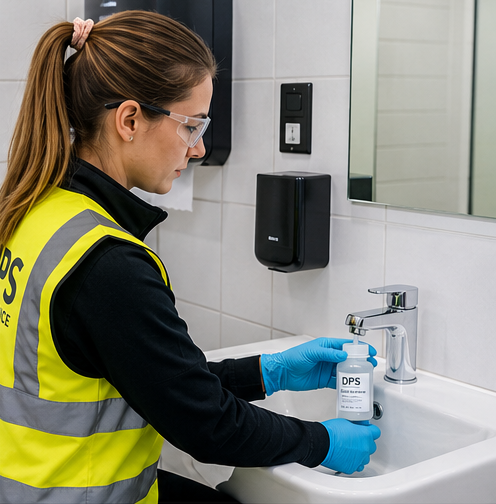
What Is the Risk?
Legionella bacteria are common in natural water sources but can become a significant health hazard when they colonize man-made water systems. The risk is highest in systems where water is maintained at temperatures between 20°C and 45°C, which provides the optimum environment for growth.
Transmission occurs when people inhale tiny droplets of water (aerosols) contaminated with the bacteria. Common sources of risk include:
- Hot and cold water systems (taps, showers, tanks)
- Evaporative cooling towers and condensers
- Spa pools and whirlpool baths
- Humidifiers and air washers
- Decorative fountains and water features
What the Law Requires
Compliance is not optional. Under the Health and Safety at Work Act 1974 and the Control of Substances Hazardous to Health (COSHH) Regulations 2002, employers and those in control of premises have a legal duty to manage the risk of Legionella.
The Health and Safety Executive (HSE) provides specific guidance through:
- ACoP L8: The Approved Code of Practice for the control of Legionella bacteria in water systems.
- HSG274: Technical guidance divided into three parts covering cooling towers, hot and cold water systems, and other risk systems.
Failure to comply with these regulations is a criminal offense and can lead to heavy fines or imprisonment.
The Consequences of Non-Compliance
The impact of a Legionella outbreak or a failure to manage risks extends far beyond legal penalties:
- HSE Prosecution: Significant financial penalties and legal costs that can cripple a business.
- Civil Liability: Personal injury claims from affected individuals or their families.
- Insurance Issues: Non-compliance may invalidate your insurance policies, leaving the business fully liable.
- Reputational Damage: Loss of trust from clients, employees, and the public, which is often impossible to recover.
How DPS Compliance Ltd Manages It
We provide a comprehensive management framework to ensure your site remains safe and fully compliant with UK law:
- Risk Assessment: Detailed site surveys to identify and evaluate potential sources of risk.
- Written Control Scheme: A bespoke plan detailing the measures required to control identified risks.
- Monitoring & Sampling: Regular temperature checks and UKAS-accredited laboratory water analysis.
- Schematic Drawings: Accurate mapping of your water systems to identify dead legs and risks.
- Logbook Management: Digital or physical record-keeping to demonstrate compliance during inspections.